RUFFINI ON TOUR #3 – Sustainable Design and Planning
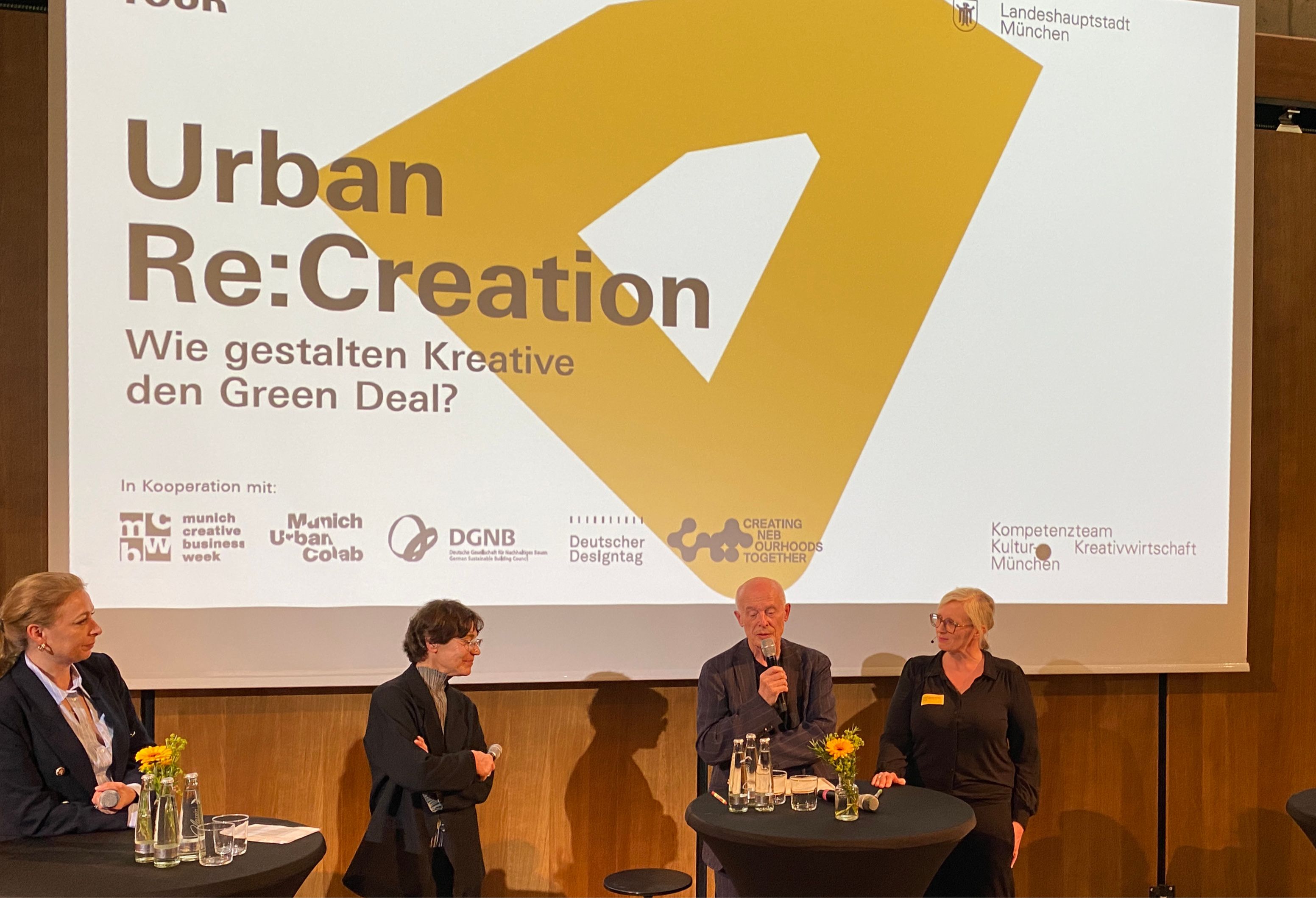
With a high-calibre line-up, RUFFINI ON TOUR #3 spanned the spectrum from sustainable design, planning and construction in the spirit of the New European Bauhaus to aesthetics and narratives for ecological transformation.
Highlights
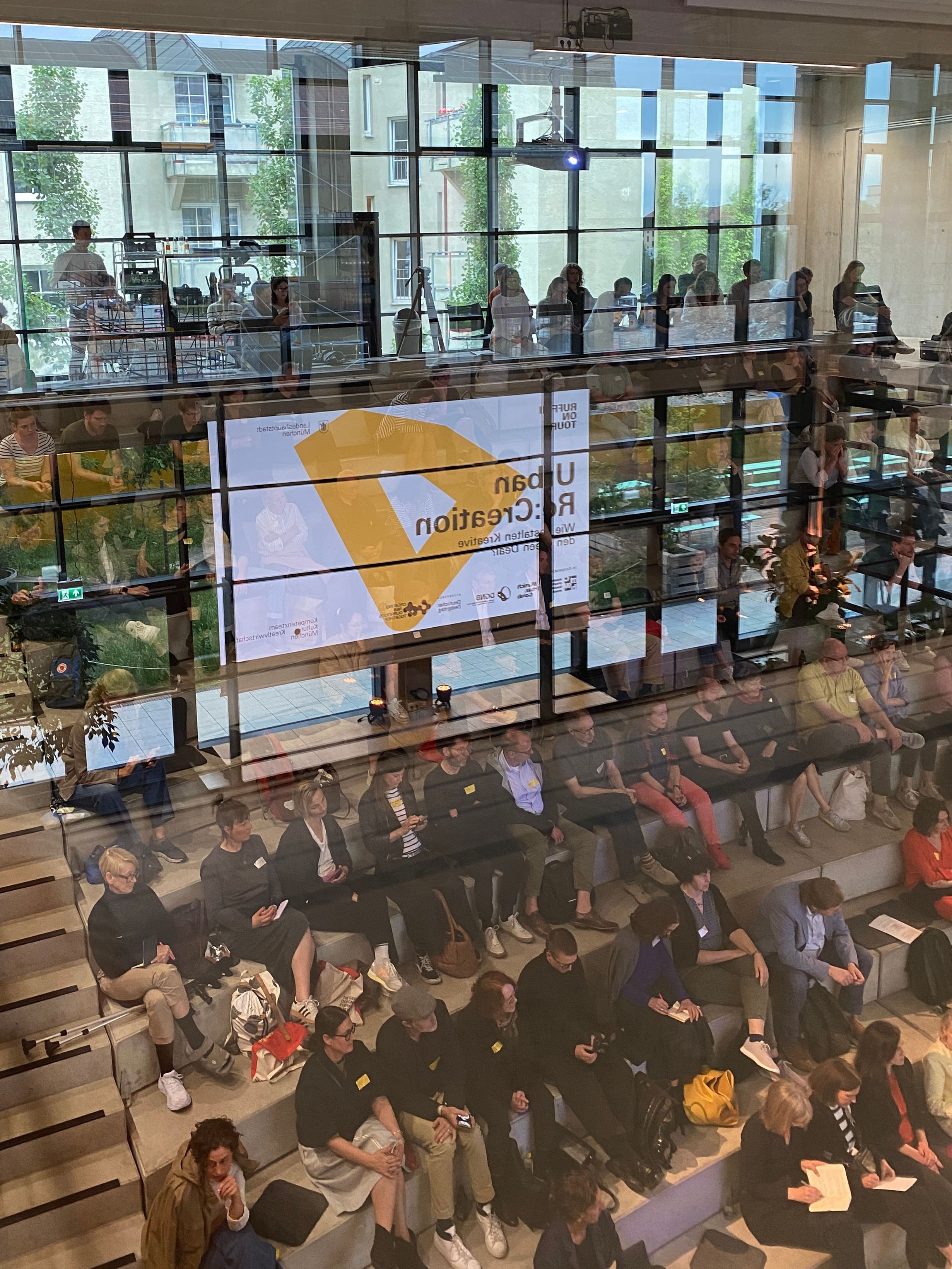
The third edition of RUFFINI ON TOUR took place at Munich Urban Colab in May 2024 as part of Munich Creative Business Week.
The focus was on the role that the various sub-sectors and players in the creative industries and aesthetics can play in tackling ecological transformation.
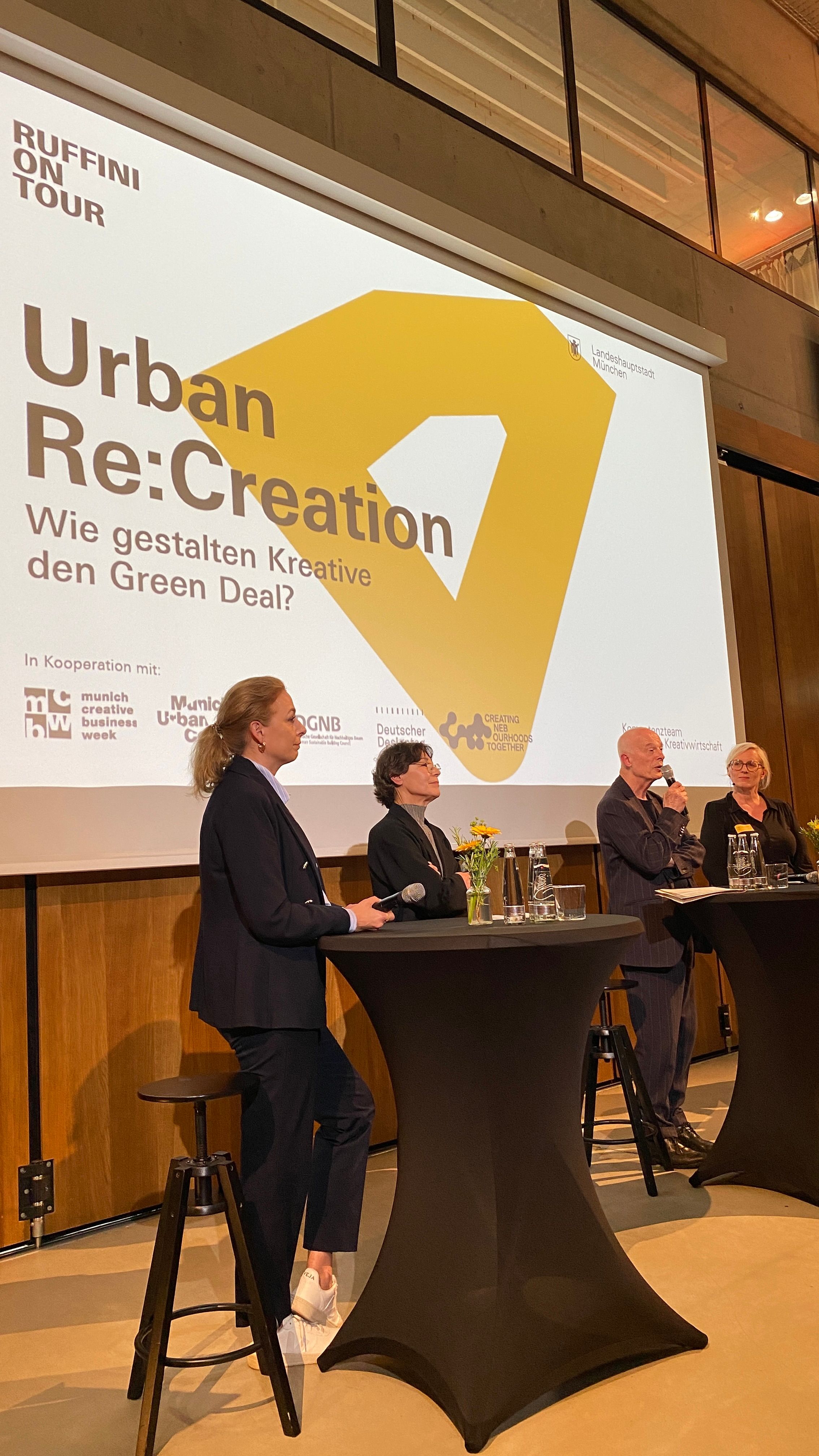
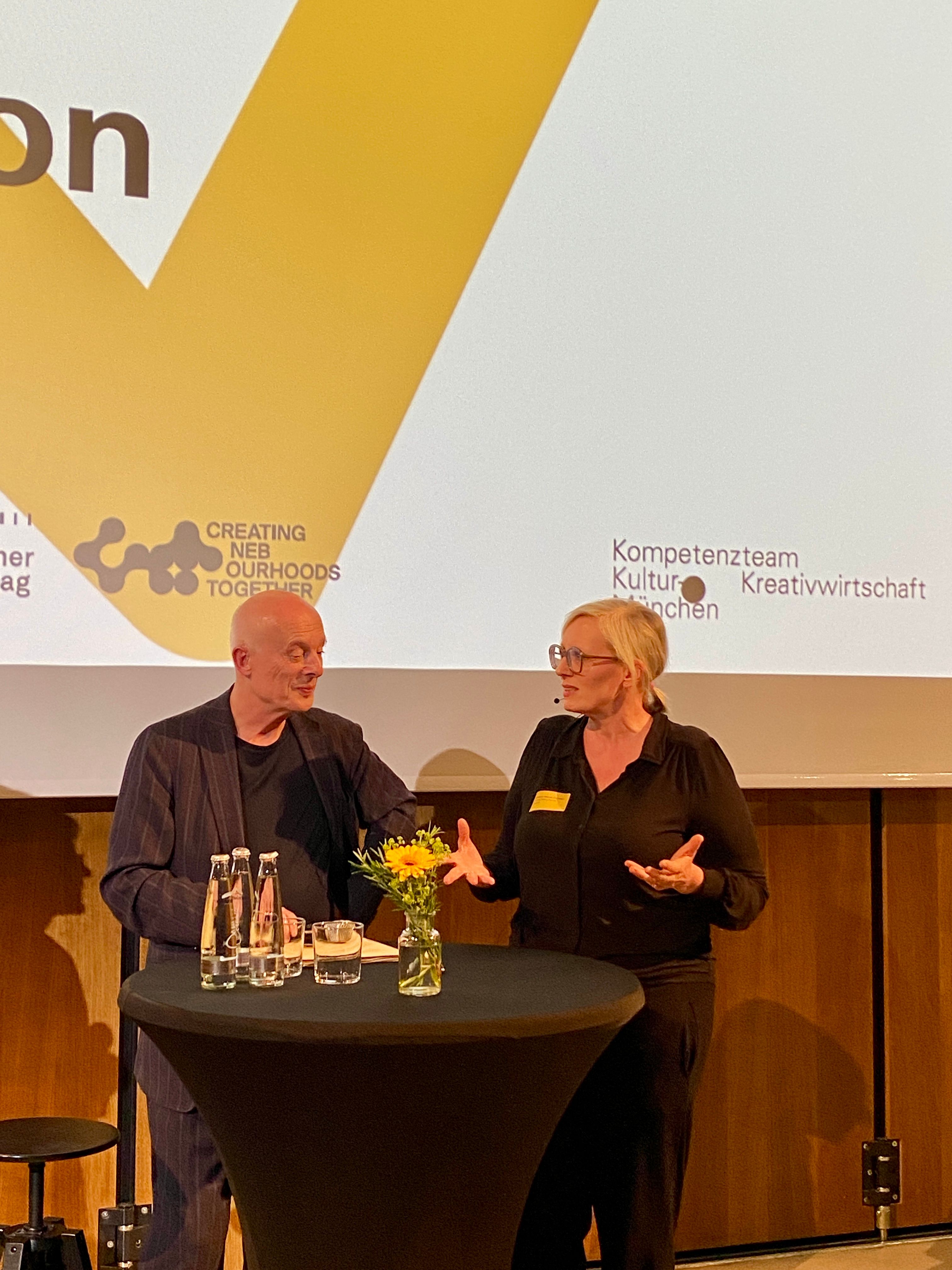
With a view to the city as a designed environment, keynote speaker and co-founder of the New European Bauhaus movement Professor Hans Joachim Schellnhuber and other guests covered topics ranging from sustainable design and construction to a new aesthetic and the co-creative implementation project ‘Creating NEBourhoods together’.
CO2 sink from high-tech and no-tech
In his keynote speech ‘The great re-entanglement of nature and civilisation’, Professor Hans Joachim Schellnhuber emphasised that it is no longer just a matter of halting climate change, but rather of actively eliminating CO2 emissions in the sense of negative emissions, i.e. the consistent use of materials that absorb and store CO2 over a long period of time. This can only be achieved if we design cities as ecosystems and learn from nature.
For Schellnhuber, the image of the city stands pars pro toto for our entire designed and built environment. Cities must become CO2 sinks, which implies doing away with concrete.
For his solution perspective – an environment consistently designed by humans as a CO2 sink – Schellnhuber advocated a combination of ‘no-tech’ and ‘high-tech’. In the area of no-tech, he sees the ‘universal power of beauty’ that is inherent in nature, providing us with functionality and touching our hearts.
Dr Christine Lemaitre, Managing Director of the German Sustainable Building Council (DGNB), emphasised the need to rethink away from the ‘yes we can mentality’ with which ‘we build glass houses in the desert’.
As a trained civil engineer, she advocates a new image of architecture in which ‘one size fits all’ is no longer the motto of the construction industry, but rather a design of omission and reuse is finding its way into design and construction.
Uli Mayer-Johanssen, co-founder of Meta Design AG and member of the Club of Rome, spoke from a designer's perspective and insisted on the importance of the role of creative professionals in inventing new narratives. It is important to reach the heart of each individual in order to get things done.
To illustrate this, she quoted Aristotle: ‘Teaching is not filling a vessel, but kindling a fire.’
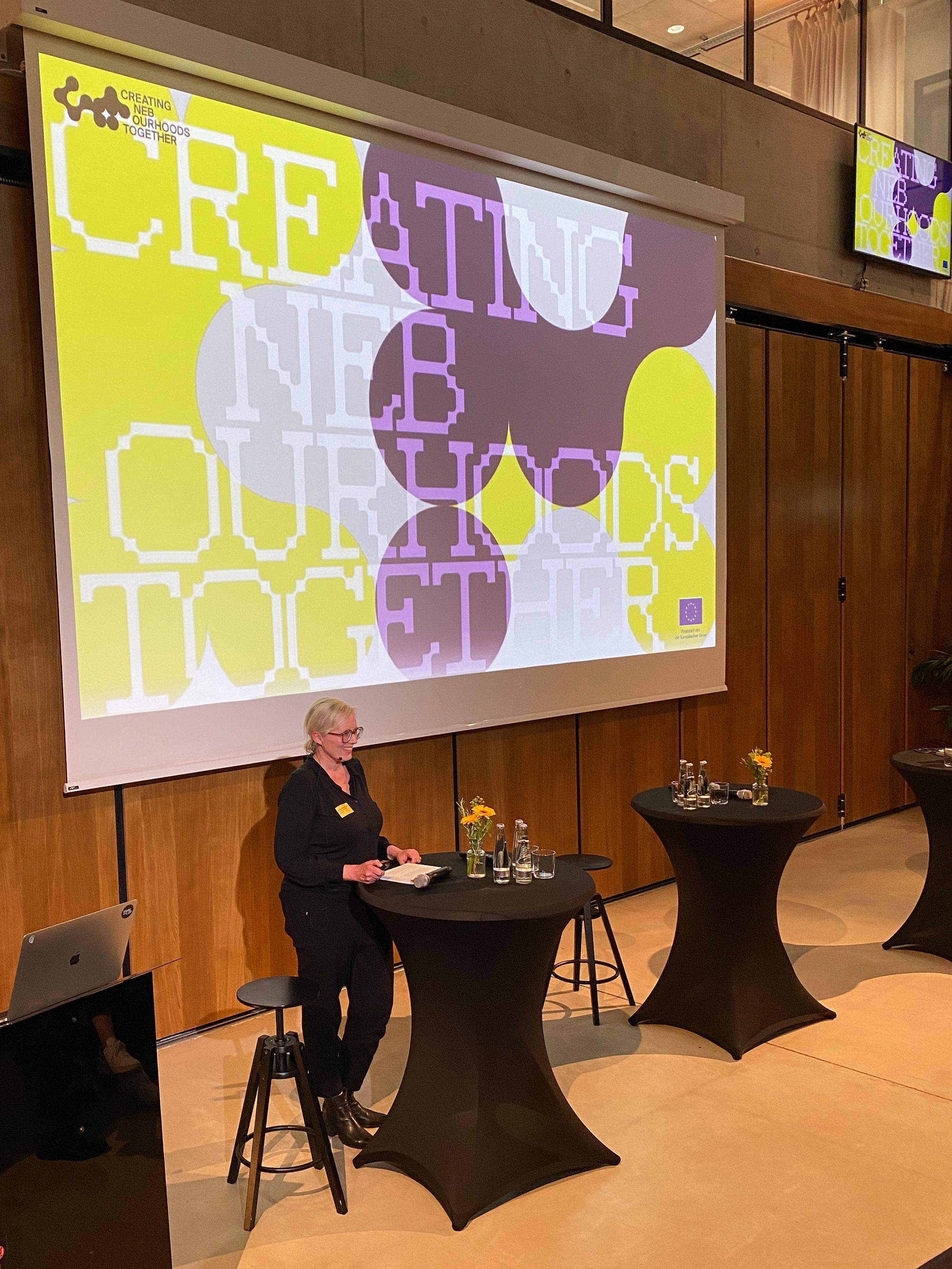
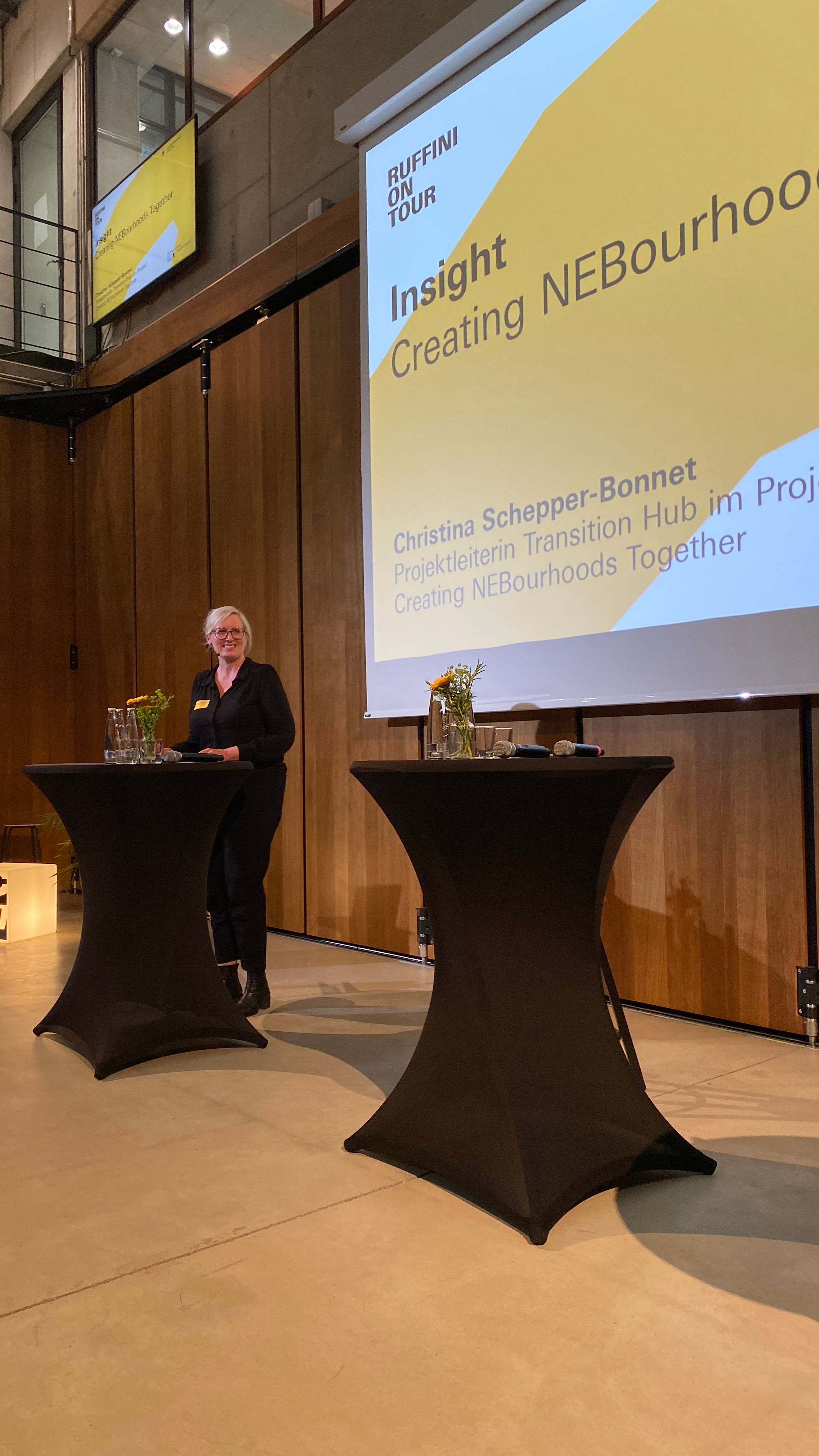
Christina Schepper-Bonnet, project manager of the NEBourhoods Transition Hub and member of the Cultural and Creative Industries Competence Team, showed in her presentation how transformation processes can be set in motion. She reported on the New European Bauhaus Lighthouse project ‘Creating NEBourhoods together – designing beautiful, environmentally friendly and sustainable neighbourhoods together’, which is currently being implemented in Munich-Neuperlach.
Her learning is that the focused initiation of local communities is the starting point. Communities that see opportunities in crises and grow into viable starting points for transformation through knowledge and skills from across society – encouraged and empowered by the creative power of artists and creative professionals in carefully designed and facilitated processes of co-creation.
Text: munich business. Wirtschaftsförderung für München
Picture Credits: NEBourhoods/Architekturgalerie München, Cornelia Hellstern